
In the Union Budget for Financial Year 2023-24 (FY24), Finance Minister Nirmala Sitharaman had held forth on the need for better governance and investor protection in the banking sector. She had proposed certain amendments to the Reserve Bank of India Act (RBI Act), 1934; the Banking Regulation Act (BR Act), 1949; and the Banking Companies (Acquisition and Transfer of Undertakings) Act, 1970.

There is a near consensus that at least a 25 basis points cut, if not 50, can be expected in the June policy.

Some accounts can be revived by rescheduling loans, which the RBI envisages to do once the norms get finalised after the public discussion.

Here are the key decisions announced by the Reserve Bank of India on Thursday.

In the June quarter of FY24, 51 per cent of consumers who took small-ticket personal loans already had more than four credit products at the time of accessing yet another new loan, compared with just 17 per cent in the June quarter of FY20, points out Tamal Bandyopadhyay.

Bankers said high interest rate could make Indian economy sluggish given that inflation is around 5%

RBI should monitor export credit offtake and how well banks implement its instruction.

There is a narrow chance that the central bank may cut rates in the future, according to a poll of 15 economists and treasurers.

RBI Governor Raghuram Rajan on Tuesday kept the repo rate unchanged 6.50 per cent.

The Reserve Bank of India had taken steps to tighten liquidity in a bid to curb volatility in the forex market after the rupee fell to a record low of 61.21 to the dollar on July 8.

The Reserve Bank of India (RBI) on Friday decided to leave the benchmark interest rate unchanged at 4 per cent but maintained an accommodative stance, implying rate cuts in the future if need arises to support the economy hit by the Covid-19 pandemic.

Retail inflation rose 4.38 per cent year-on-year in November, the slowest pace in data going back to January 2012.

The Reserve Bank of India (RBI) is likely to take a "more dovish" stance in its upcoming monetary policy review on December 2 and may go in for a cut repo rate in February, according to a British brokerage house report.
An action on the rate front is unlikely to figure in Rajan's plan for the moment.

The Governor said the MPC had voted to maintain its accommodative stance, implying more rate cuts in the future if the need arises.

The move may release funds locked in government securities and add to liquidity. With inflation expectations lowered, this should not impact bond sentiment in the short run

The speed at which he led the central bank in different areas -- ranging from internal reorganisation to inflation fighting, stabilising the currency, taking on rogue corporations, cleaning up bank balance sheets, and opening the sector -- makes one believe that Rajan knew he had only three years to do his job. A fascinating excerpt from Tamal Bandyopadhyay's MUST-READ Roller Coaster: An Affair with Banking.

The market direction will be guided by corporate earnings, especially the oil & gas companies, since they were responsible for earnings disappointment in the past quarter as well.

Reserve Bank Governor Shaktikanta Das on Friday said 67 per cent of the decline in the foreign exchange reserves since April was due to valuation changes arising from strengthening US dollar and higher American bond yields. The forex reserves, which stood at $606.475 billion as on April 2, have declined to $537.5 billion as on September 23. It was also the eighth straight week when the reserves declined.

The steep fall in rupee came on a day when the Reserve Bank of India in its first quarter review of monetary policy kept the all key rates unchanged but cut the gross domestic growth forecast to 5.5 per cent for FY'14 from 5.7 per cent earlier.
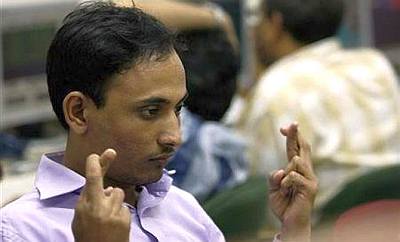
Markets closed the day in green on favourable domestic factors,

Unless RBI temporarily relaxes the norms on recognising of bad loans, the pressure on this front could rise in the December quarter.
Repo rate may well end 2013 at 8 per cent, where it had begun the year.

The recovery in the Indian services sector was sustained in November as new work orders supported business activity growth and the first rise in employment in nine months, a monthly survey said on Thursday.

'Trust your new governor,' Omkar Goswami advises RBI Deputy Governor Viral Acharya. 'Just because he is from the IAS and doesn't carry a PhD from a US university does not make him unsuitable for the task.' 'If anything, Das will pour oil on troubled waters, and save the RBI's reputation.'
The Reserve Bank left interest rate unchanged.

RBI's out-of-turn rate cut has surprise few economists.

Linking all new floating rate loans to an external benchmark won't impact existing borrowers, so customers who have taken long-term home loans recently should watch things carefully, say Joydeep Ghosh and Sanjay Kumar Singh.

India's manufacturing sector activity witnessed a significant loss of growth momentum in May due to the intensification of the COVID-19 crisis and its detrimental impact on demand, a monthly survey said on Tuesday. The seasonally adjusted IHS Markit India Manufacturing Purchasing Managers' Index (PMI), fell to 50.8 in May, down from 55.5 in April, as companies observed the slowest rises in new work and output in ten months amid intensification of the COVID-19 crisis. In PMI parlance, a print above 50 means expansion while a score below 50 denotes contraction.

Market participants attribute the stability to the Reserve Bank of India's timely intervention in the foreign exchange market, both in terms of selling and buying dollars.
Higher for longer' may be the narrative in the developed markets, but interest rates might not stay high for very long in India, with a section of the market expecting rate cuts to begin this year. The six-member Monetary Policy Committee of Reserve Bank of India (RBI) decided to keep interest rates unchanged at 6.5 per cent in the April review - after hiking the policy repo rate in six previous meetings. RBI Governor Shaktikanta Das emphasised that the pause was only for the April policy and that the central bank was ready to act if the situation demanded.

Amid an increase in localised lockdowns across the country, Reserve Bank Governor Shaktikanta Das on Wednesday said there is no need for a loan repayments moratorium at present, stating that businesses are better prepared to face the situation. It can be noted that the RBI had announced a six-month moratorium in the early days of the national lockdown last year to help borrowers impacted by a chilling in economic activity. The entire state of Maharashtra is in a lockdown for non-essential services and localised and night lockdowns are being observed in many pockets of the country, including the national capital, to restrict the surge in cases.

A fall presents an opportunity to buy rate-sensitive stocks.

Assocham expressed concern over the precarious situation that the manufacturing sector is in, observing that if the trend does not reverse with monetary and fiscal measures it would be difficult for the industry to generate jobs.

Other members of the high-level advisory committee are former RBI Deputy Governor Usha Thorat, former Securities and Exchange Board of India Chairman C B Bhave, and Nachiket M Mor, Director of the Central Board of Directors of RBI, Governor Raghuram Rajan said.

According to Soumya Kanti Ghosh, chief economic advisor of the State Bank of India group, a 50 bps rate cut is a possibility, but 25 bps is more likely.

The Reserve Bank on Tuesday said growth is expected to fall below 5 per cent in 2013-14 in absence of pick-up in manufacturing sector, but likely to recover to 5.5 per cent in the next financial year.
Chetan Ghate, Pami Dua and Ravindra Dholakia have been appointed for 4 years

Foreign investors have pulled over Rs 6,400 crore from the Indian equity market in the first four trading sessions of the ongoing month when the Reserve Bank of India (RBI) and US Federal Reserve raised interest rates. Given the headwinds in terms of elevated crude prices, inflation, tight monetary policy among others, FPIs' flows in India are expected to remain volatile in the near term, Shrikant Chouhan, Head - Equity Research (Retail), Kotak Securities, said. Foreign Portfolio Investors (FPIs) remained net sellers for seven months to April 2022, withdrawing a massive amount of over Rs 1.65 lakh crore from equities. This was largely on the back of anticipation of a rate hike by the US Federal Reserve and due to the deteriorating geopolitical environment following Russia's invasion of Ukraine.

The WPI has been in the negative zone since November.
 © 2026 Rediff.com - Advertise with us - Disclaimer - Privacy Policy - Sitemap - Feedback - About us - Terms of use - Grievances